Tackling the energy transition seriously
I was in Gleisdorf this week from Tuesday to Thursday at the MIA - Mission Innovation Austria conference. There was a lot of talk about the energy transition as a nice hobby, nothing serious.
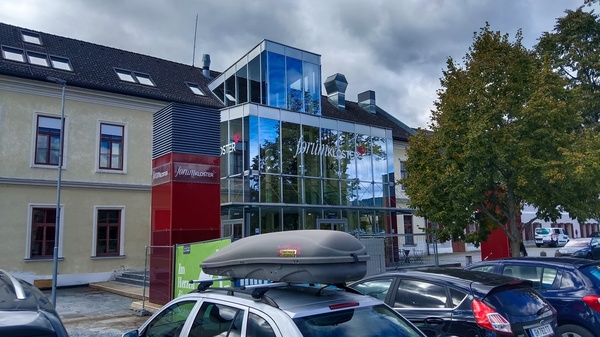 I was in Gleisdorf this week from Tuesday to Thursday at the MIA - Mission Innovation Austria conference.
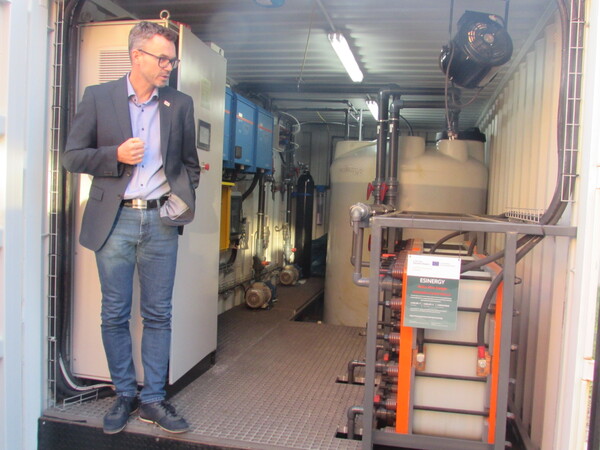 The first stop was a tour of the Weiz Innovation Center. The plan was to visit an electricity storage facility there. When you see a 20-foot container, you assume it contains around 1 MWh of batteries.
Far from it, it is only 100 kWh, because it is a redox flow system with vanadium. Back in November 2008 at a conference on renewable energy in Berlin, I had to severely criticize this battery chemistry: The raw material range. How many kWh of batteries can be produced with the proven raw material deposits?
In terms of kWh batteries, lithium has thousands of times the raw material range of vanadium. This does not even take into account the 0.1 ppm of lithium in seawater. Mining 0.1 ppm lithium is certainly a challenge, but there are 11,000 ppm sodium in seawater.
I read on a poster: Integration of a redox flow storage system into a renewable energy community. A whole community? 140 kWh sodium batteries are planned for the GEMINI next generation house 60. If the entire proven vanadium deposits were only used for redox flow batteries, only 39 million 140 kWh batteries could be produced.
The first stop was a tour of the Weiz Innovation Center. The plan was to visit an electricity storage facility there. When you see a 20-foot container, you assume it contains around 1 MWh of batteries.
Far from it, it is only 100 kWh, because it is a redox flow system with vanadium. Back in November 2008 at a conference on renewable energy in Berlin, I had to severely criticize this battery chemistry: The raw material range. How many kWh of batteries can be produced with the proven raw material deposits?
In terms of kWh batteries, lithium has thousands of times the raw material range of vanadium. This does not even take into account the 0.1 ppm of lithium in seawater. Mining 0.1 ppm lithium is certainly a challenge, but there are 11,000 ppm sodium in seawater.
I read on a poster: Integration of a redox flow storage system into a renewable energy community. A whole community? 140 kWh sodium batteries are planned for the GEMINI next generation house 60. If the entire proven vanadium deposits were only used for redox flow batteries, only 39 million 140 kWh batteries could be produced.
|
The most important innovations
|
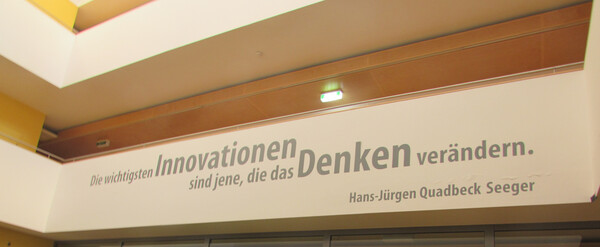 The most important innovations are those that change the way we think. This saying is in the stairwell of the Weiz Innovation Center. Unfortunately, my GEMINI habitable solar power plant has only changed the way a few people think.
I want to change the way we think from saving, restricting and renouncing to world-wide prosperity. I want to change the thinking about the climate crisis from net zero emissions and everything will be fine again to planetary restoration back to 350 ppm. I have designed the GEMINI next generation house as a strategic product.
The most important innovations are those that change the way we think. This saying is in the stairwell of the Weiz Innovation Center. Unfortunately, my GEMINI habitable solar power plant has only changed the way a few people think.
I want to change the way we think from saving, restricting and renouncing to world-wide prosperity. I want to change the thinking about the climate crisis from net zero emissions and everything will be fine again to planetary restoration back to 350 ppm. I have designed the GEMINI next generation house as a strategic product.
|
How can we reach and inspire people?
|
Wow, what a super title, I have to go there. But there's a shock right from the first picture:
 Aren't we currently experiencing a traffic turnaround? A wallbox has 11 kW, that's not even enough for a dishwasher, washing machine and oven put together. I'm amazed to see that it's all about getting people excited about energy communities. Particular emphasis is placed on inspiring poor people.
There are local and regional energy communities in Austria. If all members of an energy community are connected to the same medium-voltage transformer, then it is a local energy community. If it is the same high-voltage transformer station, then it is a regional energy community.
If 50 kWh are generated and 100 kWh consumed in a quarter of an hour in an energy community, then half of the price and the reduced grid charges of the energy community apply to the consumers and the other half the normal grid charges and the price from the electricity supplier.
Many energy communities only have photovoltaics without storage. The motto is: "Hooray, the sun is shining, there's electricity from the energy community". But these are precisely the times when the price on the spot market is 0 to negative.
Therefore a price comparison 0 cent/kWh spot market price and the handling fee of SpottyEnergie.at against 12 cent/kWh excl. VAT for regional and local energy communities calculated with the grid fees of the province of Salzburg:
Aren't we currently experiencing a traffic turnaround? A wallbox has 11 kW, that's not even enough for a dishwasher, washing machine and oven put together. I'm amazed to see that it's all about getting people excited about energy communities. Particular emphasis is placed on inspiring poor people.
There are local and regional energy communities in Austria. If all members of an energy community are connected to the same medium-voltage transformer, then it is a local energy community. If it is the same high-voltage transformer station, then it is a regional energy community.
If 50 kWh are generated and 100 kWh consumed in a quarter of an hour in an energy community, then half of the price and the reduced grid charges of the energy community apply to the consumers and the other half the normal grid charges and the price from the electricity supplier.
Many energy communities only have photovoltaics without storage. The motto is: "Hooray, the sun is shining, there's electricity from the energy community". But these are precisely the times when the price on the spot market is 0 to negative.
Therefore a price comparison 0 cent/kWh spot market price and the handling fee of SpottyEnergie.at against 12 cent/kWh excl. VAT for regional and local energy communities calculated with the grid fees of the province of Salzburg:
- 16.32 cents SpottyEnergie.at
- 22.33 cents local energy community
- 24.93 cents regional energy community
What effect does this have in practice? I paid €528.45 for 2,571.285 kWh at home in 2024. That's 20.55 cents per kWh. Here are all my bills from 2024.
So I ask the question, what do members of an energy community typically pay for their electricity?
There are no studies on this, we are not discussing it here!
This was the outrageous answer. Basically, energy communities in Austria are the last refuge for storage-free photovoltaic systems, where they can still make a tidy profit. This means that the motivation is going completely in the wrong direction: setting up an energy community instead of retrofitting electricity storage systems.
One exhibitor is from Murau, as the poster he is standing in front of shows. The following dialog:
- RM: Is Murau still in Salzburg or already in Styria?
- ER: Styria
- RM: Great, then there are cheap properties there, Salzburg is too expensive
- ER: Even in Salzburg, land is still far too cheap, houses are still being built there
That is hatred of humanity. How is a misanthrope supposed to come up with good solutions for the future of our civilization if hatred clouds the mind?
|
The positive thing about MIA
|
12 new contacts, some of which could be crucial for the future. In an environment where you can hardly speak to anyone on the phone and where emails from strangers are generally disposed of immediately, it is very important.
If everything works out, one of the contacts could even serve as a prime example of the butterfly wing effect in chaos theory. If it works, you will certainly hear about it.
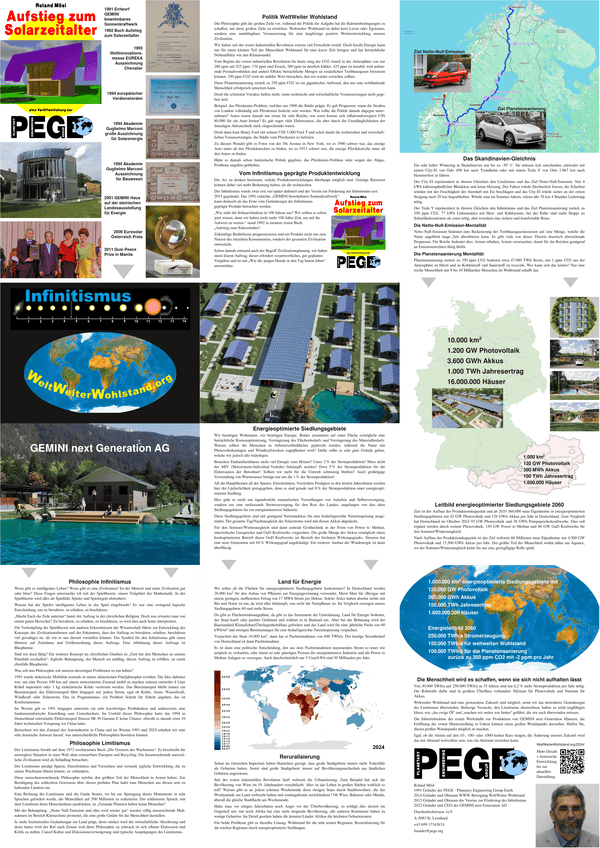 Our DIN-A0 poster: The 8-page brochure Politics and Philosophy with an introduction.
|
The net-zero emissions mentality
|
Net zero emissions means reducing greenhouse gas emissions to a level that nature can supposedly absorb for a long time. For the rich, this means Maintain poverty, cause poverty, so that enough emission rights remain for the rich. See the architect and her opinion that Africans don't need roads.
|
The planetary restoration mentality
|
Planetary cleanup back to 350 ppm CO2 means about 47,000 TWh of electricity to filter 1 ppm CO2 from the atmosphere and recycle it into carbon and oxygen. Who can afford that? Only a rich human race, 10 billion people in prosperity can do it. One million km² of energy-optimized settlement areas alone should contribute 150,000 TWh for the necessary electricity for world-wide prosperity and planetary restoration.
|
GEMINI next Generation AG will prove the contrary
|
It's not about whether the shares will be worth 100 times or 1000 times more in 20 years' time or whether they will only be worth a few cents. It's about the future of us all. Will there be a big showdown between eco-fascism and yesterday's fossils, or will it be possible to overcome the deep divisions in society and inspire supporters of both sides to work towards a great new goal?
Global prosperity and planetary restoration instead of saving, restricting, renouncing and climate catastrophe or peak oil and a little more climate catastrophe. Both sides must be convinced that they have no solution that is even remotely viable.
On the one hand, it must be shown that net-zero emissions are a completely inadequate target and that the goal must instead be a planetary clean-up back to 350 ppm CO2. The other side must be shown that solar power enables a higher standard of living than fossil energy.
It's about survival! The social situation in 2025 compared to 2005, extrapolated to 2045, is a horror world! If we are successful and your shares are worth 100 times more, this is just an addition to all the other achievements.
One new shareholder said "Me with my very modest investment", but €400 times €1,000 is also €400,000 for all investments up to the creation of the prototype.
There is a reward program for recommending the share to others. Two of the new shareholders have become shareholders through this reward program.
Here are the details.
|
GEMINI shares: time to buy - milestones
|
The situation has changed fundamentally since this company visited Slovakia. Necessary investment volume reduced by around 90%. Time to marketable product shortened by around one year. The 90% reduction in investment volume also means that each shareholder has significantly more shares.
The share price is now lifted towards our targets at each milestone. These milestones can happen in all areas: Financial, new shareholders, new opportunities to attract new shareholders. Contracts to build the prototype, more houses and settlements. Cooperations for realization. Purchase, arrival and testing of important technical components. |
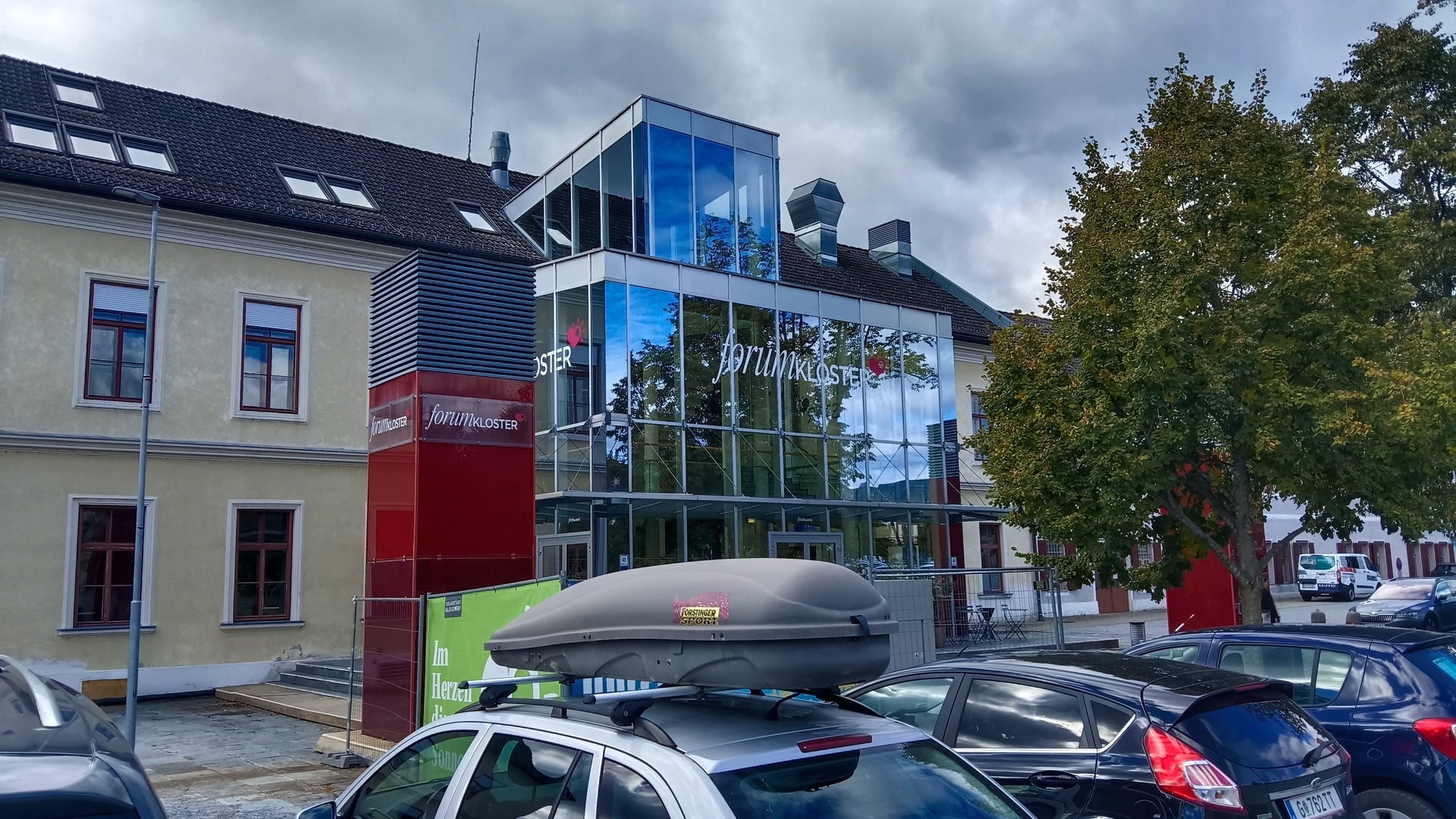 I was in Gleisdorf this week from Tuesday to Thursday at the MIA - Mission Innovation Austria conference.
 The first stop was a tour of the Weiz Innovation Center. The plan was to visit an electricity storage facility there. When you see a 20-foot container, you assume it contains around 1 MWh of batteries.
Far from it, it is only 100 kWh, because it is a redox flow system with vanadium. Back in November 2008 at a conference on renewable energy in Berlin, I had to severely criticize this battery chemistry: The raw material range. How many kWh of batteries can be produced with the proven raw material deposits?
In terms of kWh batteries, lithium has thousands of times the raw material range of vanadium. This does not even take into account the 0.1 ppm of lithium in seawater. Mining 0.1 ppm lithium is certainly a challenge, but there are 11,000 ppm sodium in seawater.
I read on a poster: Integration of a redox flow storage system into a renewable energy community. A whole community? 140 kWh sodium batteries are planned for the GEMINI next generation house 60. If the entire proven vanadium deposits were only used for redox flow batteries, only 39 million 140 kWh batteries could be produced.
The first stop was a tour of the Weiz Innovation Center. The plan was to visit an electricity storage facility there. When you see a 20-foot container, you assume it contains around 1 MWh of batteries.
Far from it, it is only 100 kWh, because it is a redox flow system with vanadium. Back in November 2008 at a conference on renewable energy in Berlin, I had to severely criticize this battery chemistry: The raw material range. How many kWh of batteries can be produced with the proven raw material deposits?
In terms of kWh batteries, lithium has thousands of times the raw material range of vanadium. This does not even take into account the 0.1 ppm of lithium in seawater. Mining 0.1 ppm lithium is certainly a challenge, but there are 11,000 ppm sodium in seawater.
I read on a poster: Integration of a redox flow storage system into a renewable energy community. A whole community? 140 kWh sodium batteries are planned for the GEMINI next generation house 60. If the entire proven vanadium deposits were only used for redox flow batteries, only 39 million 140 kWh batteries could be produced.
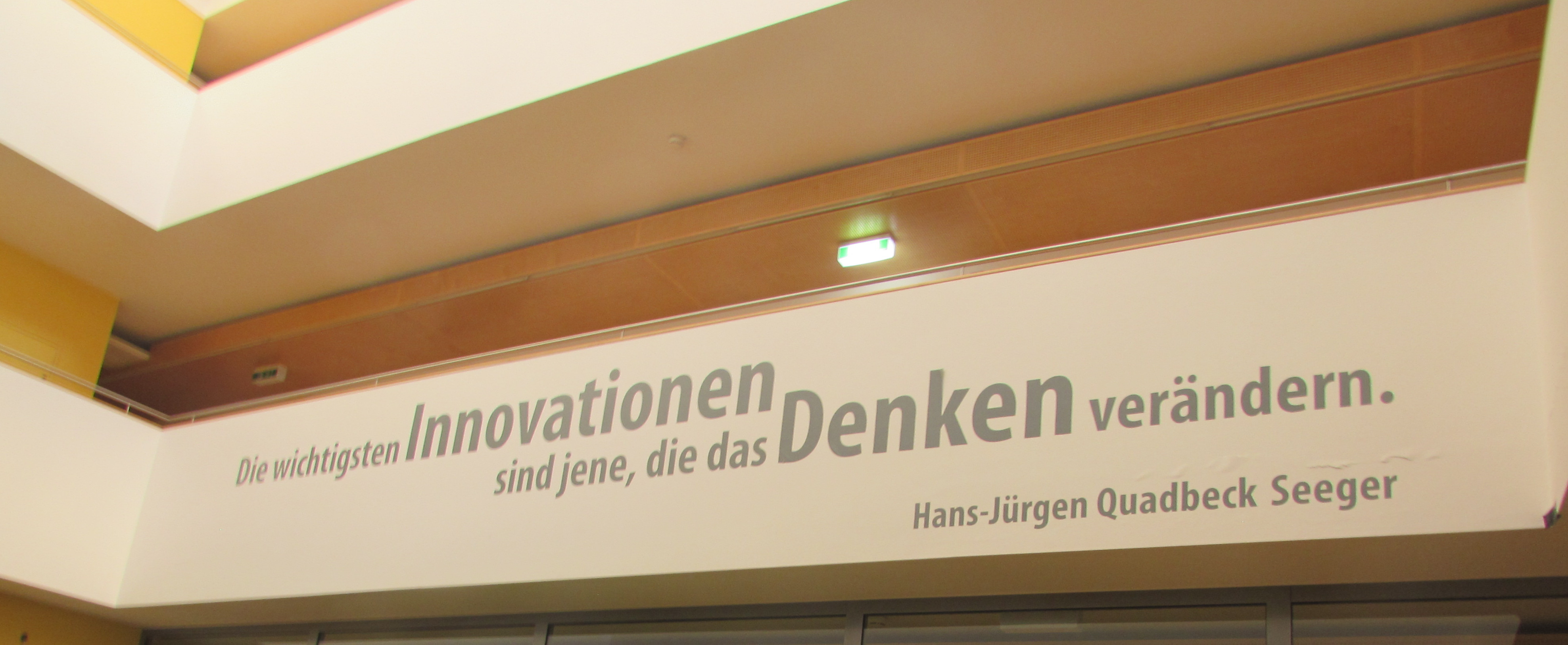 The most important innovations are those that change the way we think. This saying is in the stairwell of the Weiz Innovation Center. Unfortunately, my GEMINI habitable solar power plant has only changed the way a few people think.
I want to change the way we think from saving, restricting and renouncing to world-wide prosperity. I want to change the thinking about the climate crisis from net zero emissions and everything will be fine again to planetary restoration back to 350 ppm. I have designed the GEMINI next generation house as a strategic product.
The most important innovations are those that change the way we think. This saying is in the stairwell of the Weiz Innovation Center. Unfortunately, my GEMINI habitable solar power plant has only changed the way a few people think.
I want to change the way we think from saving, restricting and renouncing to world-wide prosperity. I want to change the thinking about the climate crisis from net zero emissions and everything will be fine again to planetary restoration back to 350 ppm. I have designed the GEMINI next generation house as a strategic product.
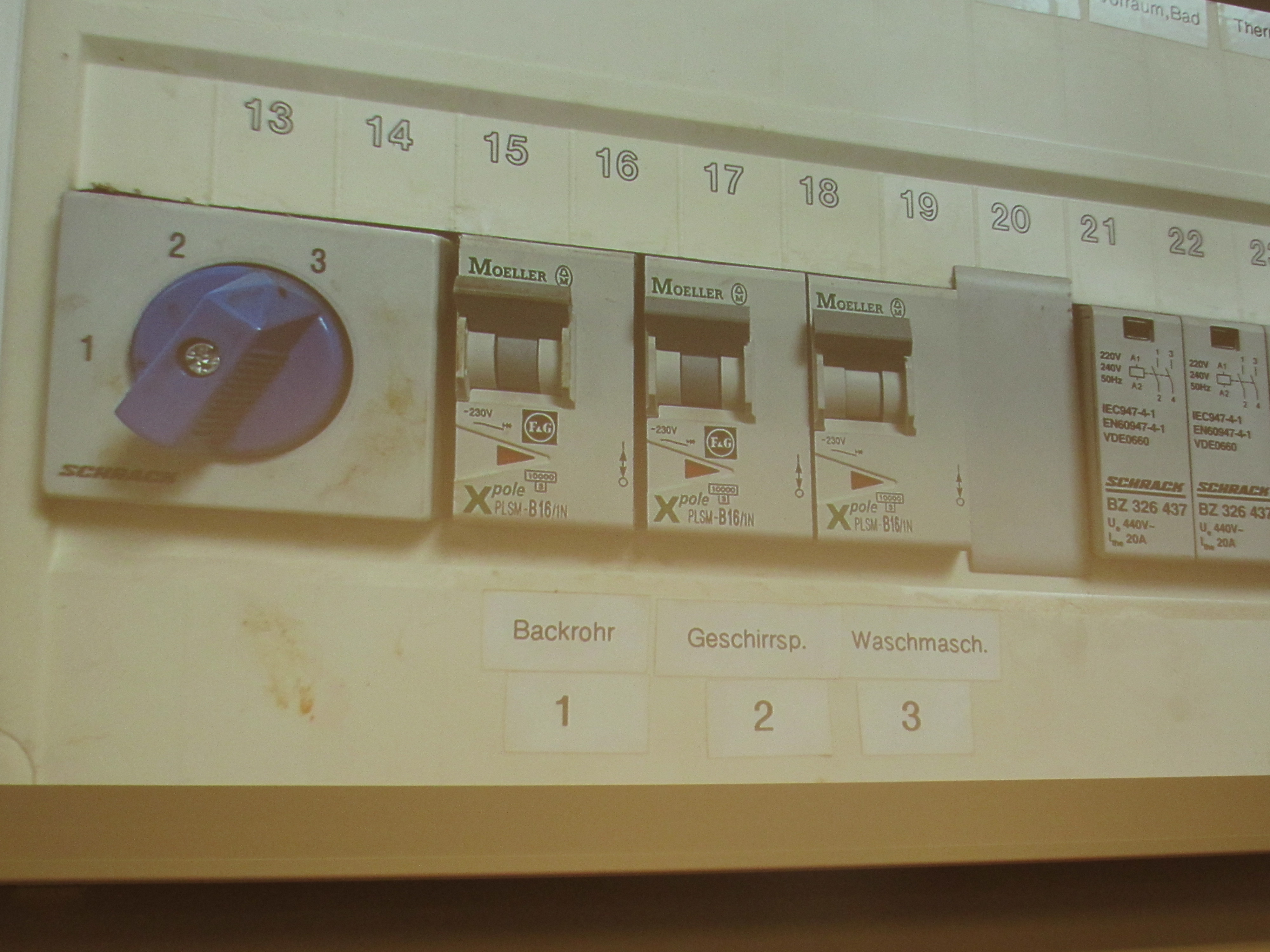 Aren't we currently experiencing a traffic turnaround? A wallbox has 11 kW, that's not even enough for a dishwasher, washing machine and oven put together. I'm amazed to see that it's all about getting people excited about energy communities. Particular emphasis is placed on inspiring poor people.
There are local and regional energy communities in Austria. If all members of an energy community are connected to the same medium-voltage transformer, then it is a local energy community. If it is the same high-voltage transformer station, then it is a regional energy community.
If 50 kWh are generated and 100 kWh consumed in a quarter of an hour in an energy community, then half of the price and the reduced grid charges of the energy community apply to the consumers and the other half the normal grid charges and the price from the electricity supplier.
Many energy communities only have photovoltaics without storage. The motto is: "Hooray, the sun is shining, there's electricity from the energy community". But these are precisely the times when the price on the spot market is 0 to negative.
Therefore a price comparison 0 cent/kWh spot market price and the handling fee of SpottyEnergie.at against 12 cent/kWh excl. VAT for regional and local energy communities calculated with the grid fees of the province of Salzburg:
Aren't we currently experiencing a traffic turnaround? A wallbox has 11 kW, that's not even enough for a dishwasher, washing machine and oven put together. I'm amazed to see that it's all about getting people excited about energy communities. Particular emphasis is placed on inspiring poor people.
There are local and regional energy communities in Austria. If all members of an energy community are connected to the same medium-voltage transformer, then it is a local energy community. If it is the same high-voltage transformer station, then it is a regional energy community.
If 50 kWh are generated and 100 kWh consumed in a quarter of an hour in an energy community, then half of the price and the reduced grid charges of the energy community apply to the consumers and the other half the normal grid charges and the price from the electricity supplier.
Many energy communities only have photovoltaics without storage. The motto is: "Hooray, the sun is shining, there's electricity from the energy community". But these are precisely the times when the price on the spot market is 0 to negative.
Therefore a price comparison 0 cent/kWh spot market price and the handling fee of SpottyEnergie.at against 12 cent/kWh excl. VAT for regional and local energy communities calculated with the grid fees of the province of Salzburg: